Why Your "Green" Cleaner Might Be Polluting Your Air
The Hidden Home Health Threat
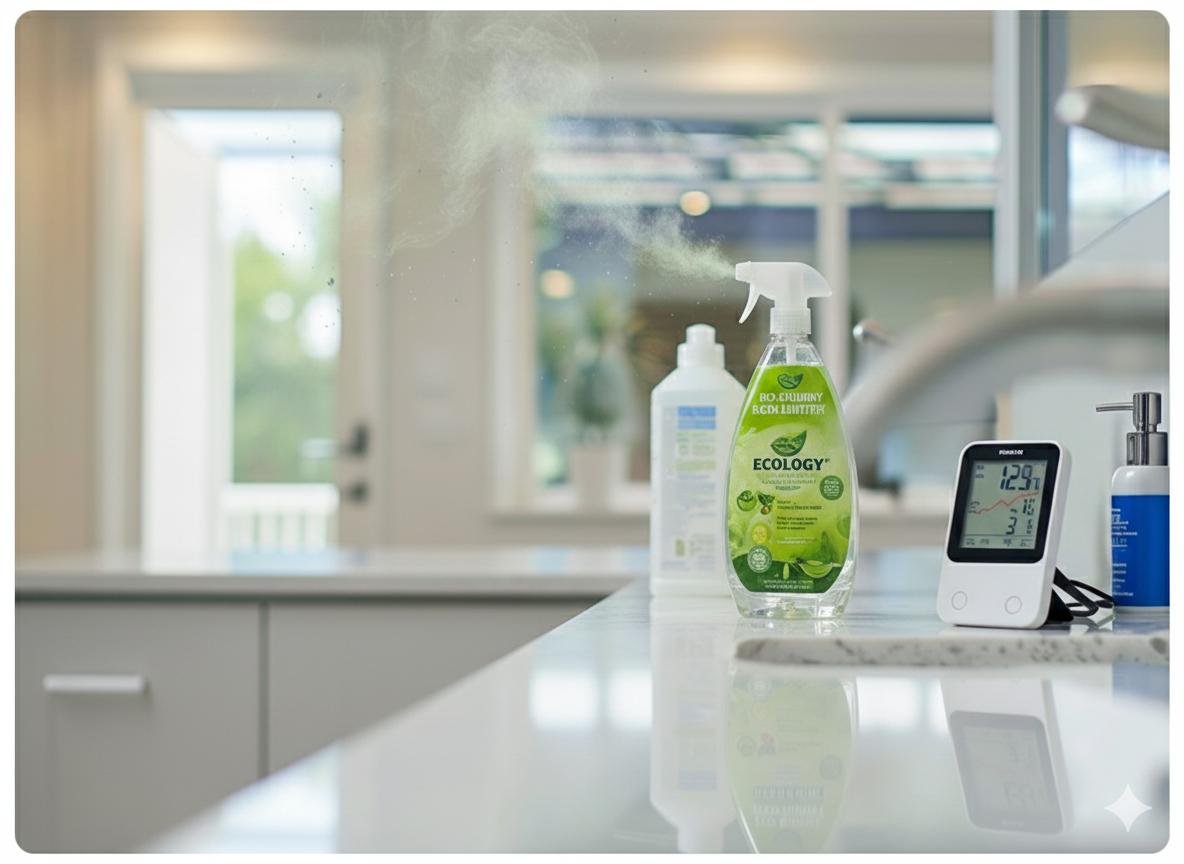
The promise of a truly clean home is appealing, but are you confusing a shiny surface with a healthy environment? Many of us, seeking to protect our families, reach for cleaning products labeled “natural,” “eco-friendly,” or “green.” We trust these words to mean “safer.” The reality: these labels are marketing tools, not safety guarantees.
The Illusion of "Green": When Marketing Masks Danger
In the U.S., there is no legally binding definition of terms like “natural,” “green,” or “eco-safe” in the cleaning products industry. This absence of regulation creates space for greenwashing—the use of colors, logos, and vague claims that imply safety or sustainability without real oversight.
A bottle that proudly says “phosphate-free” may have reduced environmental impact, but that claim has nothing to do with whether it’s safe to breathe, touch, or use around children. The Federal Trade Commission’s Green Guides focus on whether environmental claims are truthful—not whether the product is free from toxic ingredients.
The Invisible Threat: VOCs and Secondary Pollutants
The bigger problem isn’t always what you see—it’s what you inhale. Many so-called natural cleaners use plant-derived scents such as limonene (citrus) or pinene (pine). These are volatile organic compounds (VOCs) that vaporize at room temperature.
On their own, VOCs are concerning. But indoors, they often react with ambient ozone, triggering chemical reactions that generate secondary pollutants such as:
- Formaldehyde — a known carcinogen and airway irritant
- Ultrafine particles — microscopic solids that can penetrate deep into the lungs
Research shows these reactions can measurably increase indoor levels of formaldehyde and other irritants, sometimes persisting for hours after cleaning. For sensitive groups—children, asthmatics, or anyone with chronic respiratory issues—this invisible pollution can worsen symptoms and contribute to long-term health risks.
The Definitive Solution: Verification and Assessment
The most reliable way to reduce risk is to look for independent, third-party certifications. Programs like the EPA Safer Choice and Green Seal require companies to disclose every ingredient and ban substances linked to cancer, reproductive harm, or asthma. Unlike vague “green” labels, these certifications are enforceable and science-based.
2. Assess Your Indoor Air Quality
A healthy home can’t be confirmed by smell or by brand promises. Professional testing can measure:
- VOC concentrations
- Mold spores
- Radon gas
Together, these factors give a full picture of your indoor environment—something a marketing label can never do.
Knowledge = Health
A truly healthy home isn’t about assumption; it’s about verification. By choosing products backed by trusted certifications and by investing in professional indoor air quality testing, you move beyond surface appearances and toward real protection.
Ready to move from assumption to assurance? We specialize in comprehensive home health assessments, including mold remediation, advanced air quality testing, and professional radon mitigation. Take control of your home’s invisible environment today.