When a Home Becomes a Health Risk: Why Environmental Hazards Disproportionately Affect Families Facing Financial Hardship
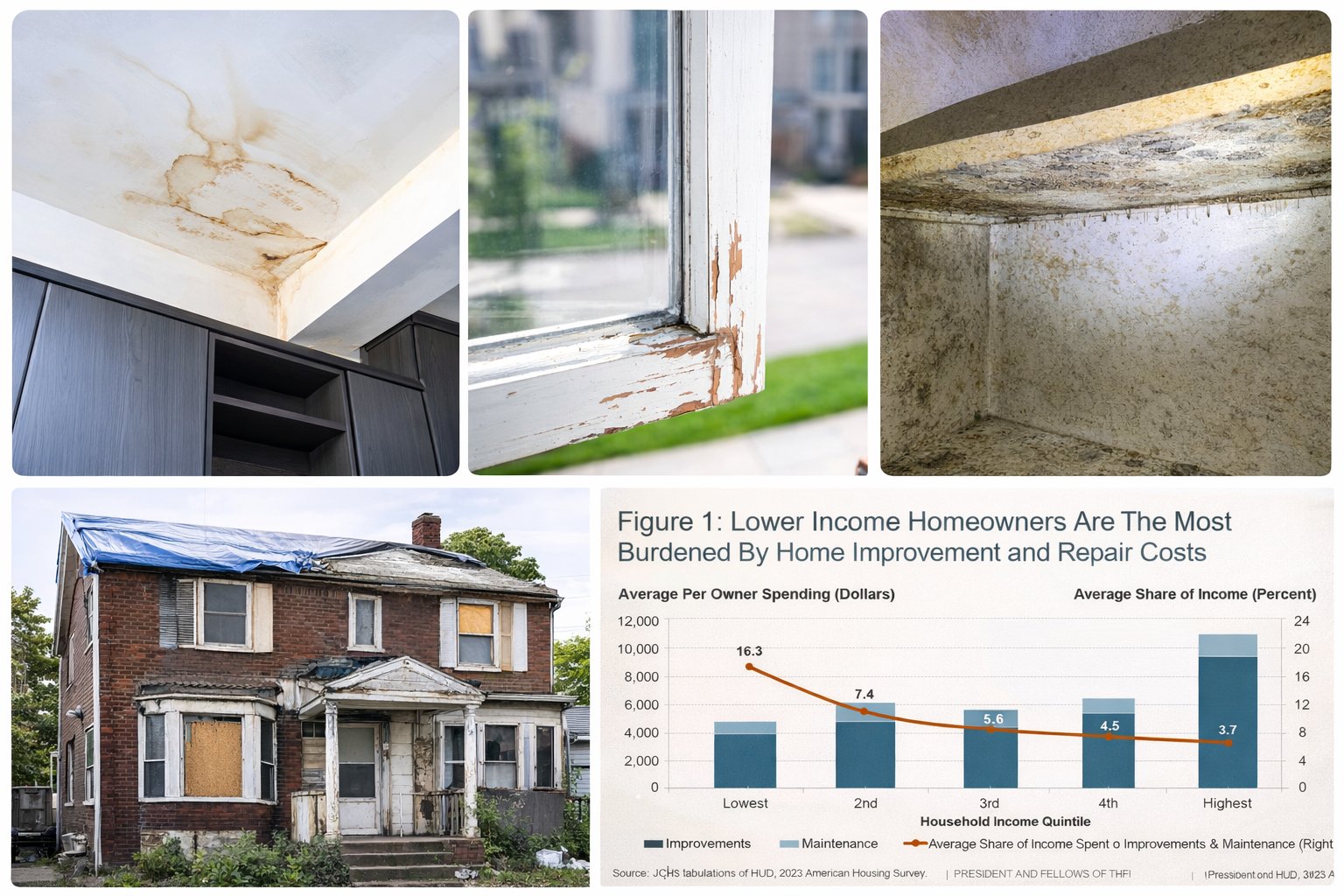
A home should be a place of safety and recovery. But for many families living with financial constraints, the home itself becomes a source of ongoing health risk—not because of neglect or poor choices, but because repairs are expensive, deferred maintenance accumulates, and small problems quietly turn into serious environmental hazards.
At Home Health Solutions, we recognize this reality. That’s why, as part of our commitment to equity and fairness, we provide professional environmental health services at cost for individuals experiencing financial hardship. Not as charity—but as a recognition that health protection should not depend on income.
This article explains why low-income and financially strained households face higher environmental risks, how common home issues (like roof leaks) cascade into serious health problems, and why addressing these hazards early is both a health and equity issue.
The Hidden Cost of Deferred Repairs
Many environmental hazards don’t begin as “toxic” problems. They begin as ordinary home maintenance issues:
- A small roof leak
- An aging plumbing line
- A poorly ventilated bathroom
- Old windows that no longer seal
When finances are tight, these issues are often postponed—not ignored, but deferred until “later.” Unfortunately, environmental hazards thrive in delay.
A leaking roof doesn’t just stain drywall. Over time, it introduces moisture into walls and ceilings, creating ideal conditions for mold growth. The same moisture can cause old paint to peel, release dust, or damage flooring materials. What started as a repair problem becomes an air quality and health problem.
Why Environmental Hazards Cluster in Lower-Income Homes
Research consistently shows that environmental risks are not evenly distributed across housing. Instead, they concentrate where three factors overlap:
1. Older Housing Stock
Homes built before modern safety regulations are far more likely to contain:
- Lead-based paint
- Asbestos-containing materials
- Poor ventilation designs
As housing ages and loses market value, it often becomes the only affordable option for lower-income families. This isn’t accidental—it’s how the housing market “filters” risk downward.
2. Deferred Maintenance
Environmental hazards often remain dormant until materials deteriorate:
- Lead paint becomes dangerous when it peels or turns into dust
- Mold grows when moisture problems go unrepaired
- Asbestos becomes hazardous when materials crumble or are disturbed
Deferred maintenance activates these hazards.
3. Limited Ability to Fix the Problem
Even when hazards are identified, fixing them is expensive:
- Mold remediation can cost thousands
- Lead hazard reduction often exceeds $10,000
- Radon mitigation, while effective, is still a major unplanned expense
For families already choosing between utilities, medical bills, and groceries, remediation simply isn’t financially reachable.
Mold: A Common Example of How Problems Cascade
Mold is one of the clearest examples of how structural issues become health issues.
A roof leak, plumbing failure, or foundation seepage introduces moisture. Without rapid drying and repair, mold can develop behind walls or above ceilings—often out of sight. Over time, spores and fragments enter the indoor air.
Health effects can include:
- Asthma attacks
- Chronic coughing or wheezing
- Sinus and respiratory irritation
- Increased illness in children and older adults
Importantly, mold problems in lower-income homes are not caused by poor housekeeping. They are driven by water intrusion and building failures that homeowners cannot afford to repair quickly.
Cumulative Risk: When Hazards Stack Instead of Occur Alone
Families facing financial hardship are rarely exposed to just one environmental issue.
The same moisture problem that causes mold may also:
- Damage old lead-based paint
- Degrade asbestos-containing materials
- Increase pest activity
- Reduce indoor air quality
These overlapping exposures compound health impacts—especially for children, seniors, and people with asthma or heart disease. Environmental health isn’t about one hazard at a time; it’s about the total burden inside the home.
Equity Means Addressing Risk Where It Exists
Environmental hazards don’t care about intent or effort. They respond to moisture, deterioration, and airflow. When financial constraints limit a homeowner’s ability to act, risk accumulates silently.
Providing services at cost is our way of removing economic barriers to prevention:
- Identifying problems early
- Prioritizing the most meaningful health protections
- Preventing small issues from becoming unmanageable crises
This approach aligns with a broader understanding of housing as part of public health—not a luxury item reserved for those with disposable income.
Our Commitment
At Home Health Solutions, we believe:
- Health protection should be accessible
- Professional environmental assessments should not be income-gated
- Early intervention saves both money and health
If financial hardship is preventing you from addressing a suspected environmental issue in your home, we encourage you to reach out. Our goal is not to upsell services—it’s to reduce risk, preserve health, and promote fairness in who gets to live in a safe home.
Because equity isn’t about offering the same solution to everyone—it’s about making sure everyone has access to protection when they need it most.