Why That Quick Radon Test Might Be Lying to You
(And What You Actually Need to Know to Protect Your Family)
If you’ve recently bought a home—or are in the process—you may have seen radon testing listed on your inspection checklist. You probably got a 48-hour test, received a number, and were told either “you’re safe” or “you need mitigation.” That’s it. Done deal.
But here’s what most people (and unfortunately, many professionals) don’t tell you:
That 2-day test doesn’t actually tell you how much radon your family will breathe while living in your home.
It’s a snapshot. A single frame in what should be a full-length movie. And depending on when the test was done, it could dangerously underestimate your actual long-term exposure.
What Is Radon, and Why Should You Care?
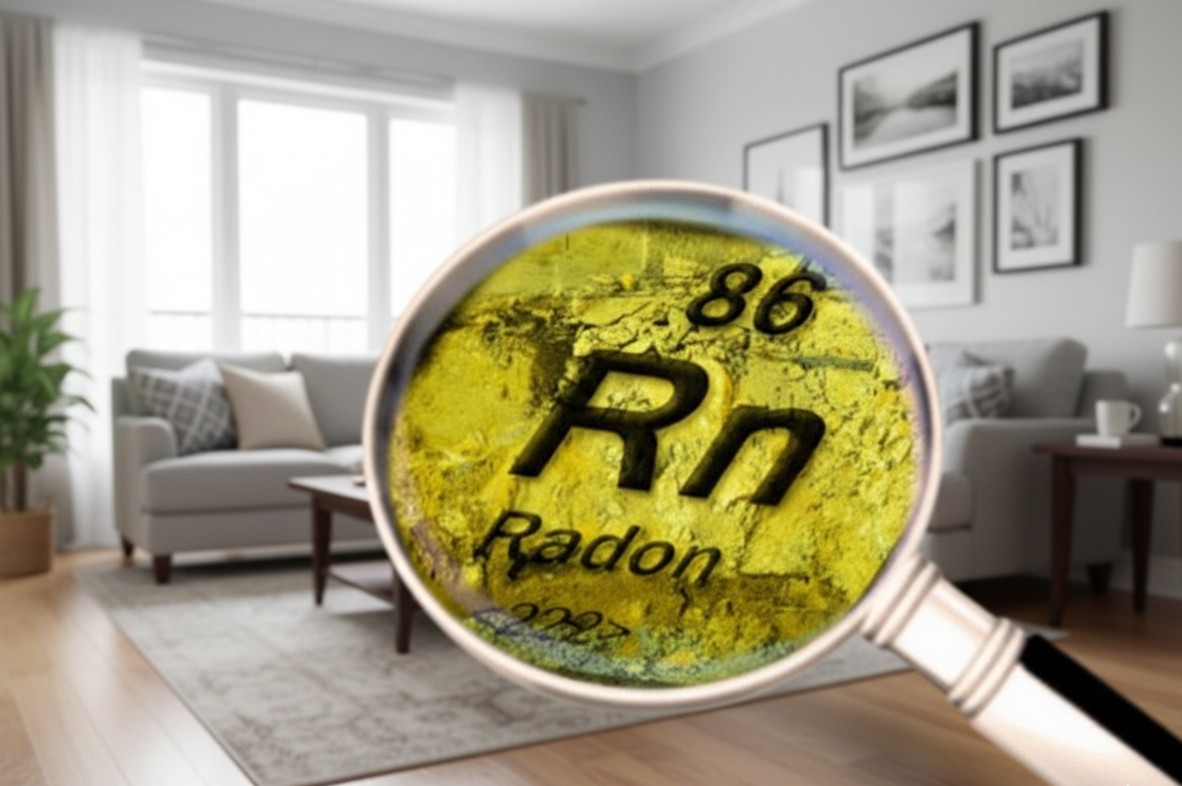
Radon is a radioactive gas that comes from natural uranium in soil and rock. It seeps into homes through cracks in the foundation, sump pits, crawl spaces, and even well water. You can’t see it, smell it, or taste it, but it’s the second leading cause of lung cancer in the U.S., right behind smoking.
Unlike carbon monoxide, which is dangerous in short bursts, radon becomes dangerous through long-term exposure. That’s why your risk depends not on a one-time test—but on what radon does across months and seasons.
The Real Estate Test: A Dangerous Blind Spot
Most real estate transactions rely on a 48-hour test placed in the basement or lowest living area. These tests are fast and convenient—but that’s also the problem.
Here’s what these quick tests often leave out:
- Radon fluctuates daily and seasonally. A winter test might show high levels, but a summer test could look “safe”—even in the same home.
- Short-term tests are easily influenced. Weather, HVAC use, open versus closed windows, and pressure differences can all drastically affect a 48-hour reading.
- They rely on a fixed threshold (4.0 pCi/L), which can be misleading. Because levels fluctuate so much, a 48-hour result under 4.0 pCi/L is not a guarantee of safety for year-round exposure.
In fact, due to this high variability, experts agree that short-term screening tests have a high potential to miss a true long-term radon risk.
The Better Way: Comprehensive Testing for True Peace of Mind
So what should you do instead? Stop relying on shortcuts and demand the full picture.
1. The Gold Standard: Long-Term Testing (90+ days)
This is the ultimate assessment. A test that runs for at least 91 days gives you a much better picture of what your family is actually breathing throughout the year. It captures seasonal variation and averages out daily spikes and dips, providing the most accurate risk profile.
2. The Smart Strategy: Repeat Short-Term Testing
If you can’t commit to a long-term test right away, consider doing your initial short-term test, and then following up with another test during a different season (e.g., a summer test followed by a winter test). This gives you a more realistic exposure range than relying on a single snapshot.
3. Use Science-Based Thresholds
At our company, we go beyond the EPA’s generic 4.0 pCi/L action level. We use duration-adjusted guidelines based on peer-reviewed studies. For a 48-hour test, we know a result of 2.0 pCi/L to 4.0 pCi/L can still mean dangerous long-term risk—we call this the "Caution Zone." We’ll help you interpret those numbers the right way.
Your Family Deserves Real Data
If you plan to live in your home for 5, 10, or 20 years, you deserve to know what you’re breathing over time—not just over 48 hours.
A quick real estate test might have helped you close the deal. But it wasn't designed to protect your health.
Whether you're a first-time homebuyer, a parent with young kids, or someone who just wants peace of mind, long-term or follow-up testing gives you the data you need to make real decisions—like whether to install a radon mitigation system or retest after sealing your basement.
Our Recommendation
- If your home has never been tested, test now.
- If you only had a quick real estate test, consider a follow-up test.
- If you’re concerned, choose a provider who uses science—not shortcuts.
At Home Health Solutions, we offer both short- and long-term radon testing, and we provide a free follow-up test if your initial short-term result falls in the Caution Zone (2.0 pCi/L to 4.0 pCi/L).
We believe radon testing should protect your health—not just check a box.
Ready to Talk It Over?
Don't gamble with your family's health. We’re happy to answer your questions and help you decide which comprehensive test is right for your home.