The Hidden Truth About Attic Mold: More Than Just an Eyesore
Lorem ipsum dolor sit amet consectetur cum sed massa auctor sit posuere integer sagittis arcu gravida urna massa amet fames.
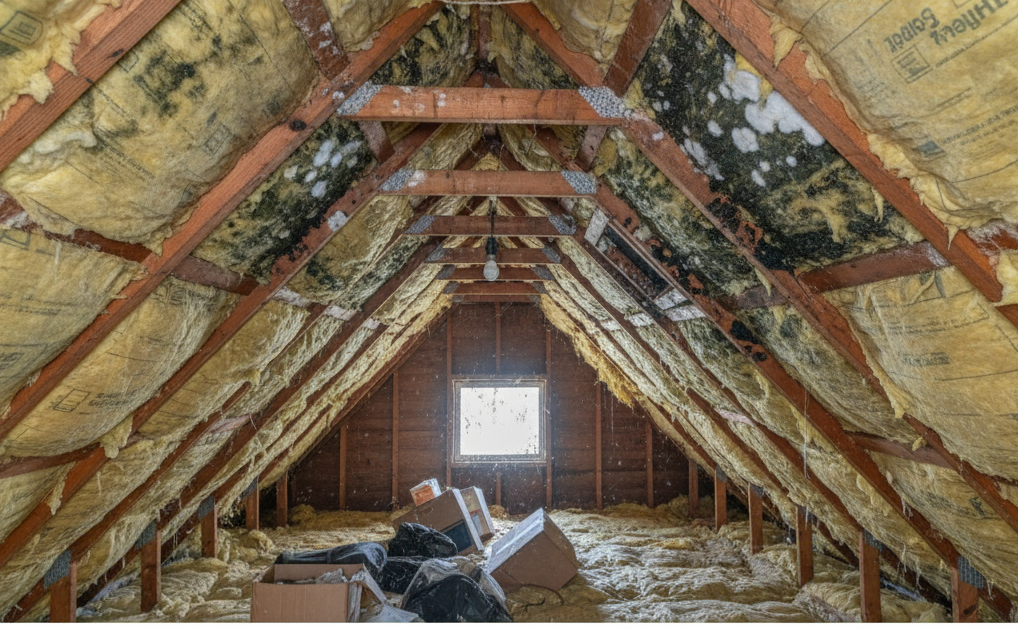
Attics—often out of sight and out of mind—can be surprisingly dynamic environments. During hot summer months, they become veritable ovens, trapping heat and humidity. These conditions alone can create a fertile ground for mold growth, but the real trouble often begins when water leaks introduce direct moisture into the space. A leaky roof or a compromised vent can transform a dry attic into a prime location for mold colonies to flourish.
In fact, it is not uncommon to find mold on the underside of roof sheathing. This is usually the result of insufficient venting, such as venting a bathroom or laundry exhaust directly into the attic, and/or having insufficient peak or soffit vents. The moisture-laden warm air that enters the attic rises, contacts the cold sheathing, and condenses.
If this happens often enough, it can affect the structural integrity of the roof through warping or rot. While it may be possible for mold-contaminated attic air to enter the house in some cases, the function and integrity of the roof may be the greater concern due to the massive expense and hazard associated with structural decay.
When faced with attic mold, homeowners often turn to professionals for advice, only to find themselves in the middle of a nuanced and sometimes conflicting debate. We recently saw a lively discussion among mold remediation experts online, highlighting just how complex these situations can be.
The Professional Divide: To Remove or Not to Remove?
One camp of professionals firmly advocates for a comprehensive approach. Their stance is that any attic remediation for significant mold growth requires the entire space to be placed under negative air pressure with HEPA filtration. This step prevents mold spores from spreading to the occupied living areas during the cleanup. Furthermore, they insist that all porous materials, especially fiberglass insulation, must be completely removed and replaced. Their argument is rooted in industry standards that emphasize source removal for contaminated porous materials.
On the other side, some experts argue that fiberglass insulation itself isn't a food source for mold. While they agree that visible mold growth needs to be addressed, they might suggest that if the fiberglass isn't physically degraded or heavily matted with mold, it may not require outright removal. They note that for mold to be a genuine health hazard, the person must be exposed. Mold settled on undisturbed fiberglass may be a low-risk concern unless the insulation is actively disturbed such as during remediation work or structural repairs, which could cause the mold spores to become airborne and potentially migrate.
However, this often sparks strong disagreement from those who view insulation as a major spore reservoir once compromised.
Mold is Ubiquitous, But Pathways are Key
It's important to remember that mold spores are ubiquitous; they're naturally present in the environment. Attics, by design, are often vented to the outdoors, meaning they're constantly exchanging air with the environment. So, finding some mold spores in an attic isn't inherently alarming. The important question isn't just "Is mold present?", but "is the source localized" and "Is there a pathway for these mold spores to impact the occupied living space below?"
This is where understanding building physics becomes essential. A phenomenon often used to describe how radon gas enters a home, the stack effect, also applies to how attic air (and its contaminants) can interact with your living space.
The stack effect generally describes a net upward flow of air in a heated building: warm, buoyant indoor air rises and exits through upper openings, drawing in cooler outdoor air through lower openings. In an attic, this usually means air is moving out of the attic. Therefore, the risk of mold in the attic entering the building space is often minimized by this natural upward flow.
However, this net upward flow doesn't guarantee containment. Mold spores still pose an exposure risk due to:
- Reversal of Flow: The stack effect can be temporarily overwhelmed or even reversed by external factors like strong winds, or internal factors like powerful kitchen or bathroom exhaust fans operating in the main living space. When this happens, a suction can be created, pulling air and potentially mold spores from the attic into the occupied areas of the house.
- Unsealed Pathways: Most homes have numerous unsealed penetrations between the attic and the living space. These include gaps around recessed lighting, plumbing and electrical chases, chimney flues, and even poorly sealed attic hatches. These pathways act as direct conduits for air and spores to bypass the general stack effect, allowing for direct exchange.
Why Home Health Solutions Stands Apart: The CIH Advantage
Ultimately, attic mold remediation isn't always a clear-cut, one-size-fits-all situation. The severity of the mold, the extent of the moisture problem, the presence of specific pathways, and the health sensitivities of the occupants all contribute to the appropriate course of action.
At Home Health Solutions, we understand that simply applying a "cookie-cutter" approach is not enough. Our firm is unique because all projects are designed and overseen by a Certified Industrial Hygienist (CIH).
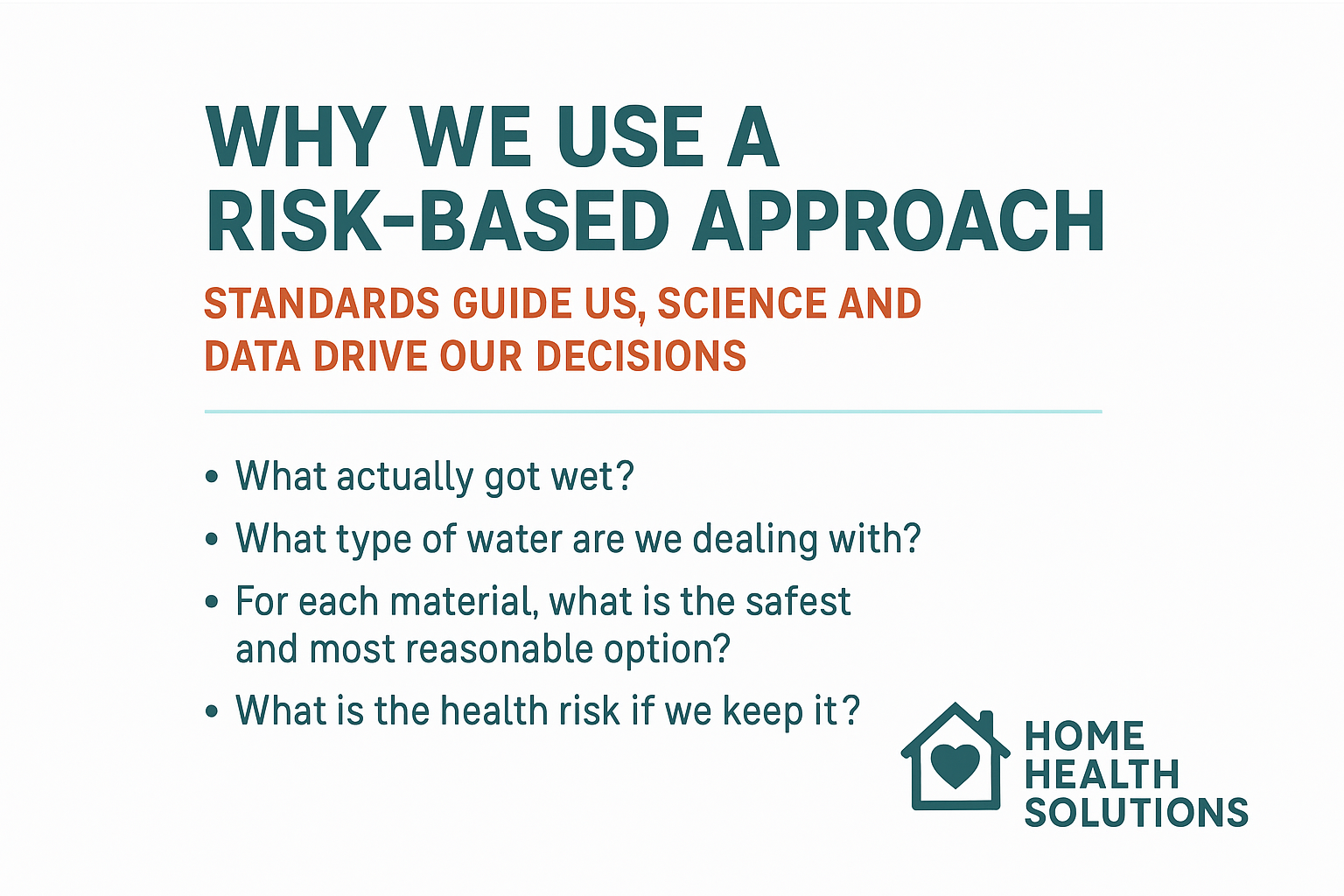
While consensus standards like IICRC S520 provide the framework for remediation, the art and science of the Industrial Hygienist is what allows us to stand above the competitors. Our CIH can conduct a thorough assessment, including evaluating the pressure differential between your house and your attic. By utilizing this specialized knowledge and applying scientific rigor, we move beyond basic protocol to make a risk-based decision—ensuring that the chosen remediation strategy effectively addresses both the structural integrity of your home and the potential health risks to its occupants.
We don't just follow the rules; we apply the science.
Contact Home Health Solutions today to get a science-backed plan for a safe and structurally sound home. To solve the underlying cause of the mold, we will also recommend the necessary steps, including consulting a home energy or roofing specialist on a proper ventilation strategy.