Moisture Meter: More Than Just a Number
Why the Moisture Meter is the Most Dangerous Tool in a Flood Restoration Project.
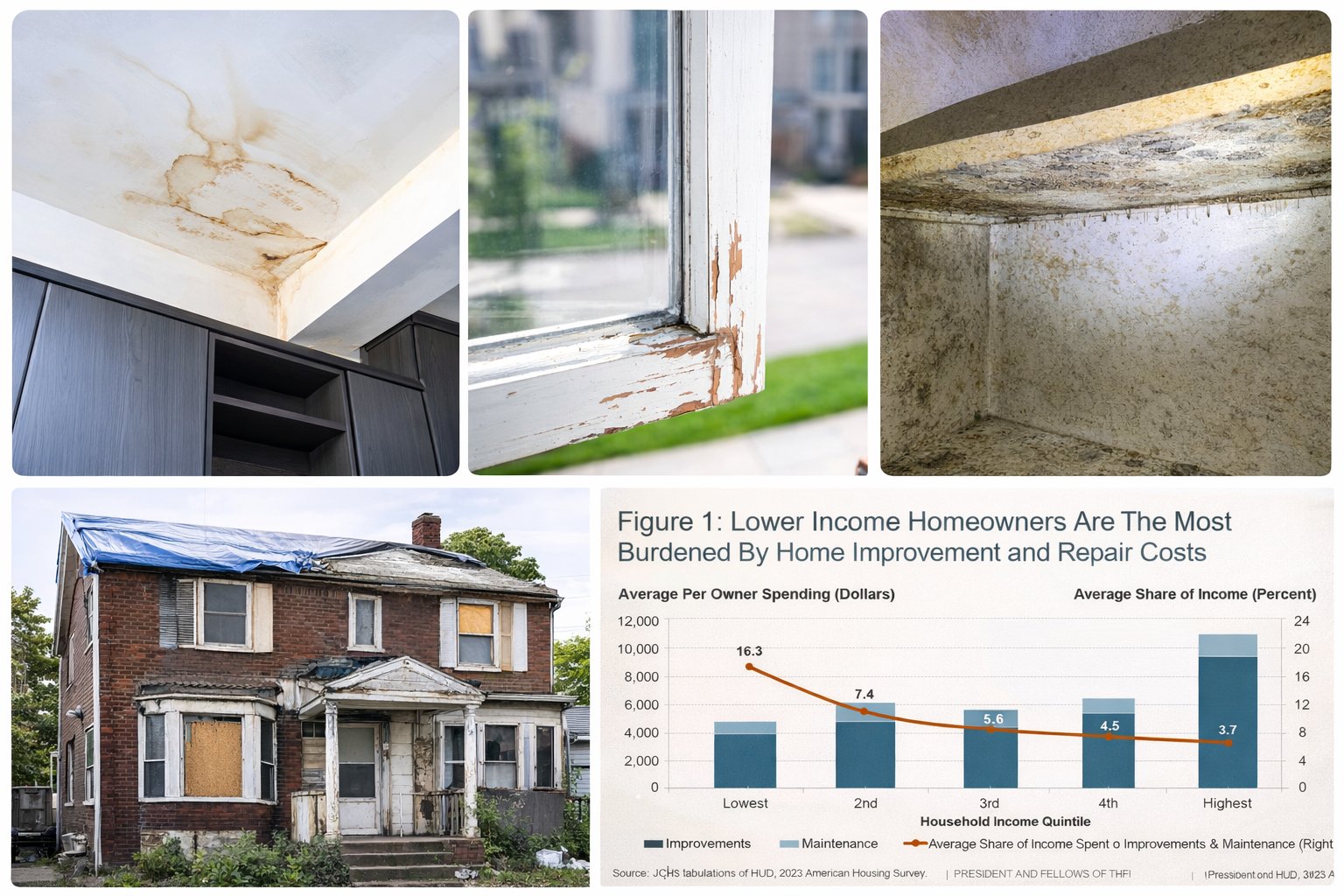
When your home suffers water damage, the clock starts ticking. Your primary goal is to stop mold, but your secondary goal—protecting your wallet—hinges entirely on the moisture assessment performed by restoration professionals.
The tool at the center of this assessment is the simple-looking moisture meter. It dictates exactly what stays, what goes, and how long the drying process will last. However, this technical device is less a precise scientific instrument and more a delicate art form. When used incorrectly, it can lead directly to thousands of dollars in unnecessary demolition costs that you, the homeowner, ultimately bear.
Here is why accurate professional assessment is non-negotiable and what you need to demand from your restoration team.
The Nuance of the Meter: An Art, Not Just a Science
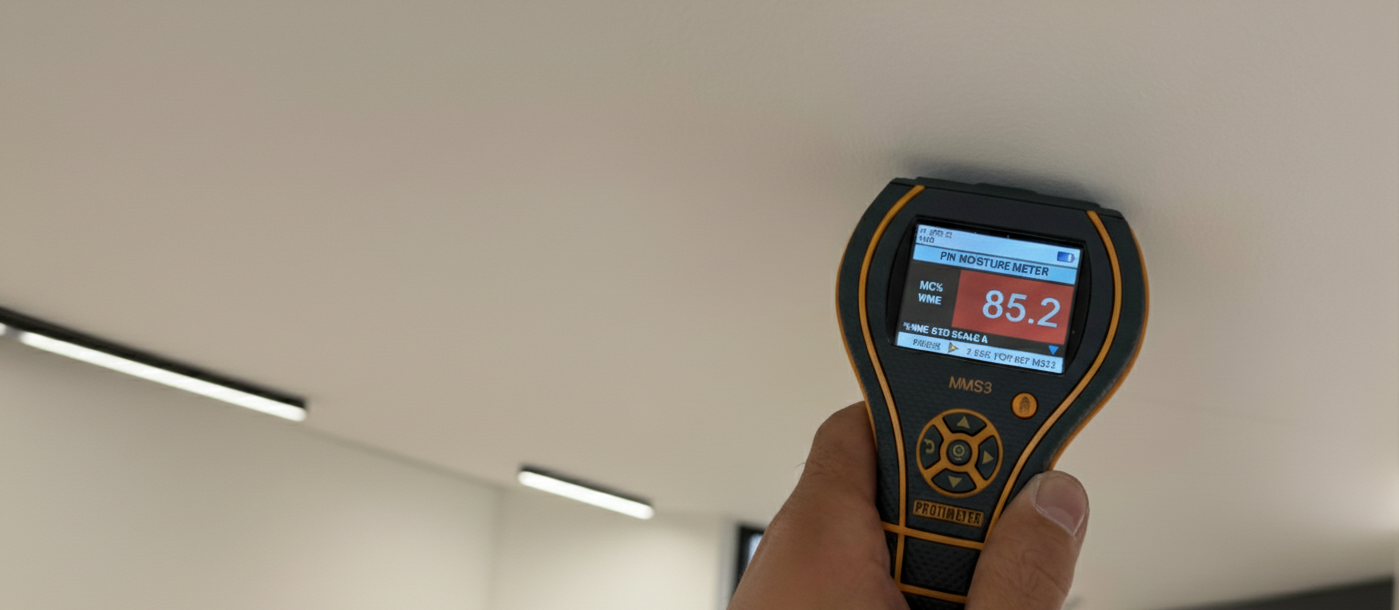
When a technician pulls out a moisture meter, they are essentially using the building material as a sophisticated electrical circuit. Water is mildly conductive, and the device translates electrical resistance or impedance into a reading—a percentage or a relative “point” value known as Wood Moisture Equivalent (WME).
Professionals often use two types of meters in tandem :
- Pinless (Non-Invasive) Meters: These quickly scan large areas without damaging the surface. They are excellent for initial screening but only read shallowly (typically 1.5 inches deep or less).
- Pin (Invasive) Meters: These penetrate the material with electrodes to give a precise, deep reading—crucial for structural wood and checking moisture at the core of a wall.
The technical challenge lies in the fact that these instruments are easily fooled by non-water materials. This is where technical training separates a professional from a careless contractor, because a flawed reading leads to an avoidable cost.
The Cost of the "False Positive": Demolition You Didn't Need
The most common error leading to unnecessary expense is the False Positive. This occurs when the meter registers extreme moisture, not because of water, but because of interference.
The most frequent culprit is metal. Modern construction contains hidden metal everywhere: screws, nails, corner bead (the metal strip in drywall corners), plumbing, and studs. Since metal is highly conductive, placing a moisture meter too close can cause the reading to spike immediately to the top of its scale, making the material look "incredibly moist".
A trained professional should immediately recognize this sharp spike as metal interference, not water migration. They are required to use a stud finder or similar tool to rule out metal before concluding the material is wet.
If a contractor proceeds with demolition based solely on a false spike—without using the proper verification protocol—they are incurring an unjustified expense for you. For instance, the unnecessary demolition and replacement of a section of drywall typically costs between $300 and $850. Every failure to verify a false positive is a direct transfer of an avoidable cost onto the homeowner or their insurer.
The Threat of the "False Negative": Hidden Mold Risk
The opposite error is just as dangerous. A False Negative means the meter indicates the material is dry when it is, in fact, still saturated deep inside.
This usually happens when a professional relies too heavily on the shallow-reading pinless meter. This meter might give a low reading on the surface of a finished wall, but it cannot penetrate deep enough to check critical structural components, such as the wood bottom plate where the wall meets the floor. If deep saturation is missed, residual moisture remains trapped. Mold growth typically begins when material moisture content consistently exceeds about 25%. Months later, you could face the high cost of mold remediation and structural repair because the initial drying was incomplete.
The Homeowner’s Shield: Documentation and the Dry Standard
The only way to protect yourself from both unnecessary demolition and hidden mold is to demand rigorous documentation. Professional standards, such as the ANSI/IICRC S500 , require technicians to follow a strict protocol.
Your two most powerful tools for accountability are:
- The Dry Standard: Your technician must take a reading on a piece of material identical to the affected area (same type of drywall, wood, etc.) that is completely unaffected by the water. This “dry standard” is the objective goal. The wet material is only considered dry when it matches this control reading. If a contractor can't show you the documented dry standard, their determination of when or where to stop is arbitrary.
- Moisture Mapping: The professional must use their meters to define the “exact edge of migration”—the precise boundary between saturated and dry material. If the contractor attempts to remove or dry an area that extends significantly past the documented wet boundary, you have the right to question the justification.
Always insist on seeing the moisture mapping documentation and the established Dry Standard. Without this transparent data, the restoration firm can easily justify an unnecessarily large scope of work, leaving you to foot the bill for their technical failure. Demand proof that the numbers justify the demolition, ensuring you pay only for damage that is verified, not damage that is simply convenient to remove.