“Black Mold,” “Toxic Mold,” and the Truth Behind the Headlines
Why Color Doesn’t Determine Risk—and What Really Matters for Your Home
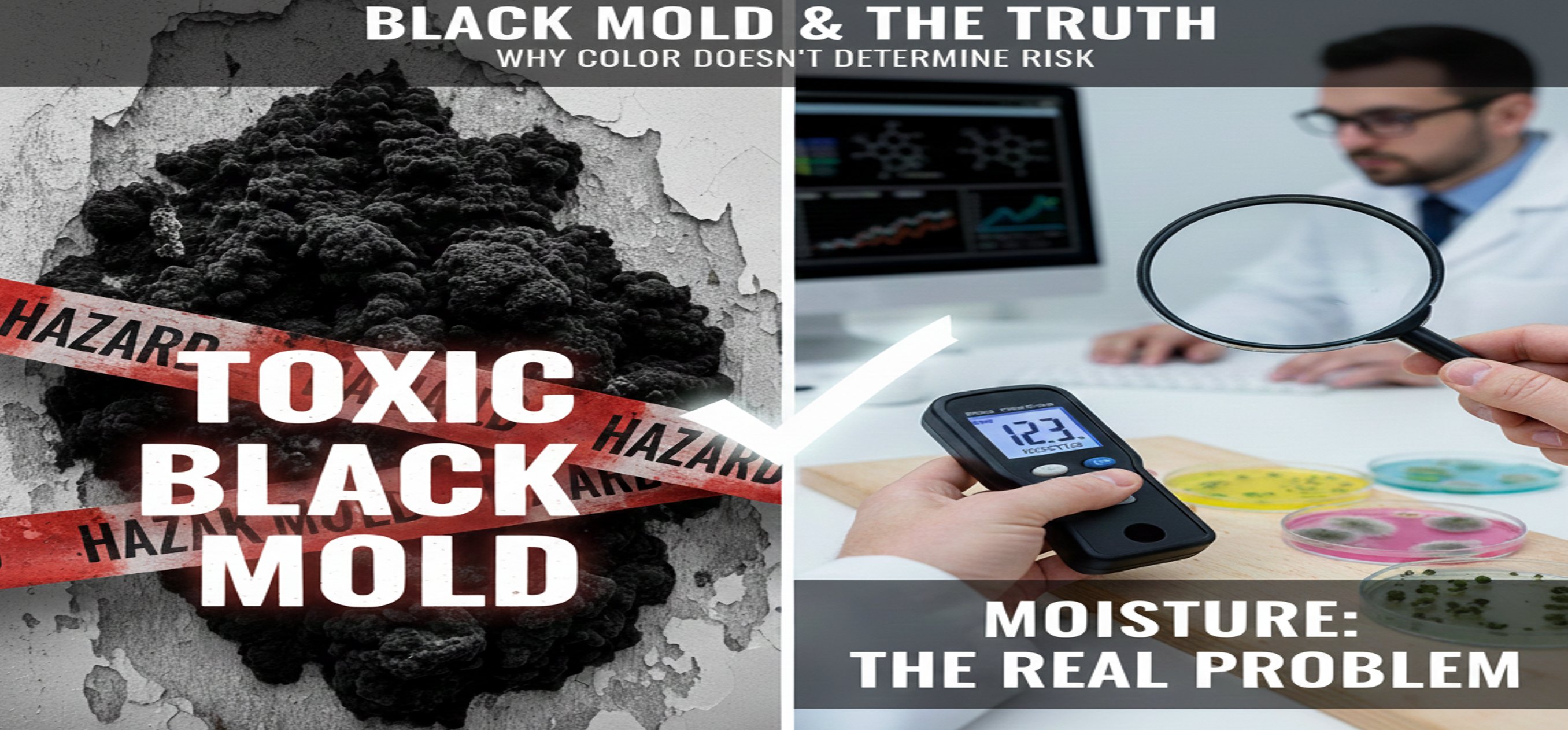
For decades, terms like “black mold” and “toxic mold” have appeared in news headlines, home inspection reports, and advertisements from mold remediation companies. These phrases sound alarming—and many companies use them deliberately to create a sense of danger.
But the real story is more nuanced. Understanding where these terms came from, and what science actually tells us, helps homeowners make informed decisions without the fear-based messaging.
Where Did the Term “Black Mold” Come From?
The roots of the “black mold” panic trace back to the 1990s infant pulmonary hemorrhage cases in Cleveland, Ohio, where investigators found significant mold growth in water-damaged homes. While Stachybotrys chartarum—a dark-pigmented species—was identified in many homes, later reviews questioned whether it was the direct cause of the illnesses.
Despite the scientific uncertainty, national coverage cemented the term “black mold” in public awareness. Since then, it has been widely misused to imply that any dark-colored mold is inherently dangerous.
“Black” Describes Color—Not Hazard
One of the clearest conclusions from modern mycology research is this:
- Many mold species are naturally dark or black in color, and the color alone does not indicate danger.
Pigmented spores are common across multiple genera, including Cladosporium, Alternaria, Aureobasidium, and Stachybotrys. Spore color often changes with age, lighting, and nutrient conditions. Skilled labs rely on microscopic and molecular characteristics—not color—to identify species.
In short:
- Black is just a color. Not a health classification.
What About the Term “Toxic Mold”?
The phrase “toxic mold” is widely misused.
Molds themselves are not toxic, but some species can produce mycotoxins under specific and prolonged moisture conditions.
Even within Stachybotrys chartarum, strains differ significantly:
- Some produce macrocyclic trichothecenes,
- Others produce atranones,
- A strain never produces both,
- Many strains produce neither under typical indoor conditions.
Mycotoxin production depends on genetics, substrate, water activity, and environmental stress—not color.
This is why experts avoid blanket labels like “toxic mold.”
Individual Susceptibility Matters More Than Color
Human responses to indoor mold are highly variable.
People who are:
- atopic (predisposed to allergies),
- asthmatic,
- immunocompromised,
- infants or older adults
may react more strongly to airborne spores, fragments, or microbial VOCs.
Two people can walk into the same damp basement and have completely different experiences—one irritated, the other unaffected. The color of the mold has nothing to do with these reactions.
If Color Isn’t the Issue, What Is? Moisture.
Every major study on indoor fungi agrees:
Mold in a home always indicates moisture—and moisture is the real problem.
Long-term moisture intrusion can cause:
- Structural damage (softening, rot, compromised materials)
- Nuisance odors (microbial VOCs)
- Degraded drywall, insulation, carpet, or wood
- Indoor humidity imbalance
- Potential health symptoms for sensitive individuals
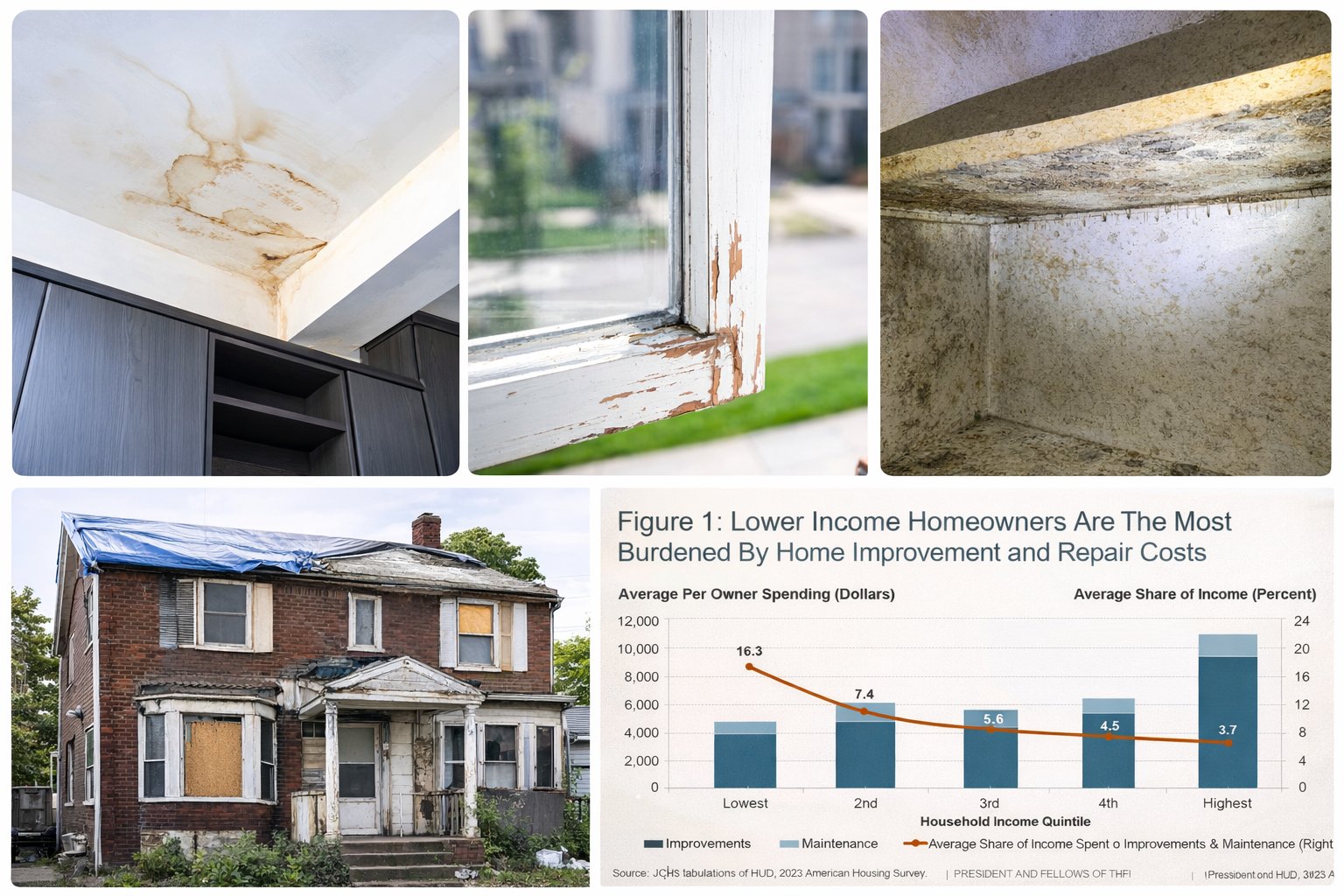
Some species, like Stachybotrys, only develop under very high water activity and sustained dampness. Their presence is a sign of significant water intrusion that must be addressed—not a reason for panic, but a reason for action.
Fix the moisture, and the mold problem resolves.
The Real Danger: Choosing the Wrong Remediation
If the color doesn't matter, what does? Choosing a company that is trained to identify and solve the moisture source—not just spray and paint over the symptoms.
Fear-based remediators treat the mold you see; science-based remediators also treat the moisture you don't see. That’s the critical difference that protects your investment and your family’s health.
References
Dyląg, M., Spychala, K., Zielinski, J., Łagowski, D., & Gnat, S. Update on Stachybotrys chartarum—Black Mold Perceived as Toxigenic and Potentially Pathogenic to Humans. Biology, 2022.
Vesper, S., et al. Overview of Stachybotrys, Memnoniella, and Related Fungi.
Hardin, B.D., Kelman, B.J., & Saxon, A. Toxic Mold and Mycotoxins: Effects on Human Health.
CDC and academic reviews on Cleveland infant pulmonary hemorrhage investigations.